3.31.2011

The Magicians by Lev Grossman


Lately I have been trying my best to shorten my TBR pile. The Magicians has been sitting on it for a good six months, if not longer. It was one of those books I bought on a whim because I thought it sounded unique and then I lost all interest. Well, it turns out I lost interest for good reason, because for me this novel just didn't work.

The premise is HarryPotteresque, but the writing is bad. Certain phrases felt out of place which made it feel awkward and clichés are overused. Not only that, the book lacks substance and underlying ideas. It's very one-dimensional and all in all, not a good read.

Publisher: Plume ,2009

3.29.2011

Top Ten Authors That Deserve More Recognition

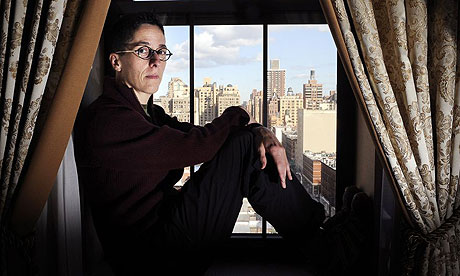
Alison Bechdel

Top Ten Tuesday is hosted by The Broke and the Bookish

Let me start by saying I don't read as many under-the-radar authors as I should. The majority of authors that I do read have already received a lot of recognition and are known world-wide. So, I am going to highlight a list of authors that you may not have heard of, or you have heard of in passing but have yet to read any of their works.

1. Alison Bechdel: Cartoonist and author of the comic strip Dykes to Watch Out For, check out Fun Home

2. Simon Rich: The youngest writer ever hired on SNL, check out Free-Range Chickens

3. Ella Hepworth Dixon: British Victorian author, check out The Story of the Modern Woman.

4. Denise Duhamel: An American poet with a feminist take, check out Kinky

5. Nella Larson: Author of the Harlem Renaissance, check out Passing

6. David Malouf: Australian novelist, short story writer and playwrite, check out Remembering Babylon

7. Sarah Shun-lien Bynum: Named one of the top 20 authors under 40 by The New Yorker, check out Ms. Hemple Chronicles

8. Merle Hodge: Caribean author, check out Crick Crack Monkey

9. Leila Ahmed: Egyptian American writer on Islamic feminism, check out A Border Passage

10. Françoise Sagan: You can learn about her from my post Françoise Sagan, My New Favorite that I wrote back in July. Check out Bonjour Tristesse

3.28.2011

A Room of One's Own by Viriginia Woolf

and I thought how unpleasant it is to be locked out; and I thought how it is worse perhaps to be locked in...

Virginia Woolf died 60 years ago today, which coincidentally fell on the same day of my review of her extended essay A Room of One's Own. The essay explores women and writing; if women were offered the same opportunities as men could they write in equal quality? Were financial limitations the only thing that held them back? And if so, why are men offered more opportunity than women?

Woolf explores these questions and their implications and then goes on to encourage an integrated humanity, one where writers (women and men alike) can write without any hindrances. The title of the work comes from Woolf's assertion that "a woman must have money and a room of her own if she is to write fiction."

Overall I found the book to be a little dry, but full of interesting ideas. If you are interested in women and writing, this text is a must-read. But it's more than that. A Room of One's Own explores the relationship between gender and socioeconomics throughout history and ends on a hopeful note. These essays are based on a series of lectures that Woolf gave to women's colleges at Cambridge University. What a lucky group of students.

Publisher: Harcourt, 1929

3.26.2011

Cat's Eye by Margaret Atwood


I'm a big fan of Atwood. She had me at The Handmaid's Tale and has been captivating me ever since. In Cat's Eye, Atwood details the life of a reclusive painter Elaine Risley, with a focus on her disturbing childhood filled with bullying and manipulation at the hands of 9-year-old girls.  It's not wonder that as Elaine grows older she struggles with her femininity and the company of women.
I remember thinking when the girls were born, first one and then the other, that I should have had sons and not daughters. I didn't feel up to daughters, I didn't know how they worked. I must have been afraid of hating them. With sons I would have known what to do... As for girls, my girls at any rate, seem to have been born with a protective coating, some immunity I lacked.
This book is about growing up and going back home. Per usual, Atwood includes elements of social and feminist comment in her work, exploring the idea of adulthood and questioning whether one can ever truly grow up. She also implies a sense of disillusionment in adulthood - that it is filled with greed and selfish motives, an evil children share as well, but don't expect to be prominent in their adult lives. 
The world is being run by people my own age, men my age, with falling-out hair and health worries, and it frightens me. When the leaders were older than me I could believe in their wisdom, I could believe they had transcended rage and malice and the need to be loved. Now I know better, I look at the faces in newspapers, in magazines, and wonder: what greed, what furies drive them on?
She also highlights the relationship between the past and the present, and the overwhelming influence our history can have over our everyday life. She interweaves the past and present - both in the plot and in her structure to suggest time has a shape "like a series of liquid transparencies, one laid on top of the other."

Of the Atwood I have read, this one is especially heavy in feminist themes. Cat's Eye explores women's relationships with one another, specifically the repression we inflict on one another. The novel is preoccupied with the question of when a girl can call herself and woman and the implications of these distinctions. Cat's Eye is a side of Atwood I hadn't yet read and I enjoyed every minute of it. She is a master of language and relates the story of a dysfunctional life beautifully.

Publisher: Anchor Books, 1988

3.23.2011

To read or not to read: Eating Animals


I really like Jonathan Safran Foer. I absolutely loved Extremely Loud & Incredibly Close, and I very much enjoyed Everything is Illuminated. I am interested in reading his non-fiction work Eating Animals, but I am hesitant to do so.

In my second year of college I took a contemporary moral issues philosophy course and one of the moral issues we covered was animal rights. I had to watch a horrific video made by PETA that detailed the cruel conditions associated with the meat market in the US (for those of you interested it's called Meet Your Meat). After I watched that video I didn't touch a piece of meat for three years.

After the sting wore off I began eating meat again. I've never been a big meat eater - I typically avoid red meat and eat poultry in moderation - but I do enjoy the option. Being a veggie was hard - not for me but for the people in my life. I always felt like a burden going to a friend or relative's house for dinner. Splitting appetizers while eating out didn't work out well for me, as the vegetarian apps were generally less appealing to my carnivorous friends. All in all, I felt like a liability whenever I ate with people.

I'm 95% certain that if I read this book I will go back to being a veggie, as it details the ethical issues involved with eating animals. I don't want to be an uninformed eater (which I don't think I am, especially after reading Skinny Bitch a few years back - a Nazi diet book whose agenda is to make you a vegan), but on the other hand - pardon the cliché - ignorance is bliss. Revisiting these horrendous topics will undoubtedly upset me and propel me into an indefinite state of vegetarianism and I'm just not sure I'm reading to do that again. So, to read, or not to read?

3.22.2011

Bookish Pet Peeves


Top Ten Tuesday is hosted by The Broke and the Bookish

1. Dog-ears: Nothing annoys me more than readers who dog-ear their books. I find it disrespectful to the text.

2. Small trim size: I don't know what it is about my eyes, but it's hard for me to read books with a very small trim size. For this reason I enjoy UK editions - their trim size is usually more appealing.

3. Annoying and contrived characters: Ehhhm Holden Caulfield.

4. Formulaic endings: Endings that are too predictable or annoyingly simple are no fun. I like an ending that makes me think.

5. Stickers: I love (lightly) used books but I hate when they have stickers that don't come off, or leave a sticky goo after you peel them off. My favorite used bookstore - Half Price Books - has price stickers that come off clean and quickly. Yet another reason I love them.

6. Cheesy covers/Movie covers: I wanted to read Dan Chaon's Await Your Reply but didn't end up buying it because the cover reminded me of a cheap Harlequin romance. I hope to someday find the hardcover edition.

7. Errors: This should go without saying, but I hate any sort of error in a book, be it grammatical, spelling, printing or otherwise.

8. Inked-up pages: Whether it's highlighter, marker or pen, I don't like writing in books unless it's in pencil.

9. Endnotes: It is so much easier to read footnotes than endnotes.

10. Quick endings: Sometimes it works, but other times it annoys me when everything is wrapped up in one final chapter. It feels rushed.

3.18.2011

Another belief of mine...


This goes along with another belief of mine: that everyone else my age is an adult, whereas I am merely in disguise.

-Margaret Atwood, Cat's Eye

3.16.2011

Falling Man by Don DeLillo


He stood and felt something so lonely he could touch it with his hands.

Don DeLillo is one of my favorite postmodern writers. He portrays modern-day America in a way that makes me question our priorities and culture. He plays with themes of consumerism, mass media, interconnectedness and the human ability to create meaningful relationships. Falling Man explores post-9/11 New York. The title refers to the image of a man who fell from the twin towers (an image that is also used in Jonathan Safran Foer's Extremely Loud & Incredibly Close). In DeLillo's novel we see a performance artist who mimics this pose as he dangles from a harness around areas throughout Manhattan. Of course the image of the falling man gives those who see it a feeling of unspeakable dread:
There were people shouting up at him, outraged at the spectacle, the puppetry of human desperation, a body's last fleet breath and what it held. It held the gaze of the world, she thought. There was an awful openness of it, something we'd not seen, the single falling figure that trails a collective dread, body come down among us all.
As this image repeatedly inserts itself into the lives of New Yorkers, the novel follows two narratives; one of a family who is trying to rebuild their lives after the attack and one of a 9/11 terrorist who prepares for the attacks. The post-traumatic recovery of this family is almost as heartbreaking as a glimpse into the life of a terrorist. The family struggles to make sense of their new world just as they struggle to understand one another.
But then she might be wrong about what was ordinary. Maybe nothing was. Maybe there was a deep fold in the grain of things, the way things pass through the mind, the way time swings in the mind, which is the only place it meaningfully exists.
DeLillo's poignant novel implies that we will continuously have to recover from the attacks as they will haunt us forever. Just as the falling man's image will continue to resurface, so will the memory of the atacks. However, rather than focus on the attacks themselves, DeLillo explores how they changed America and the daily lives of Americans. He draws significant comparisons to the "before" world that we knew to the "after". Just as 9/11 itself was chaotic, so were the lives of many American's after that day and for years to come. People struggled to understand the event and then struggled to understand themselves.
I don't know this American anymore. I don't recognize it. There's an empty space where America used to be.
DeLillo builds many layers into this story which makes it seem disjointed and fragmented. I think this structure serves to reinforce the emotions and understanding of the attacks and it's aftermath: haunting, confusing and utterly heartbreaking.

Publisher: Scribner, 2007